The skill set, in plain text
What I actually build.
Full-stack AI engineer: model layer, retrieval, agents, the interface on top, and the deployment that puts it on the internet. Every number below is measured off the running system, not estimated — where a figure couldn’t be verified against something on disk, it isn’t here.
LLM application engineering
- RAG & hybrid retrieval
- Agent orchestration
- Evaluation harnesses
- Tool-calling & streaming
- Structured output, defensive parsing
Local & private inference
- MLX on Apple Silicon
- Quantized 35B-class models
- OpenAI-compatible gateways
- Model routing & A/B
- GPU contention scheduling
Integration & data
- Postgres + pgvector
- NL→SQL with safety guards
- PII detection & substitution
- Multi-tenant isolation
- Legacy platform bridges
Front end & real-time graphics
- Next.js / React / TypeScript
- Three.js & WebGL
- Canvas 2D, PixiJS, Phaser
- Scroll-scrubbed video engines
- Responsive & mobile-hardened
Motion & generative video
- Local diffusion video pipelines
- Higgsfield / Draw Things CLI
- Frame-locked seamless chaining
- ffmpeg grade, encode, scrub-tune
- GPU job queues & contention guards
Deployment & operations
- Manifest-driven deploys
- Cloudflare Pages & Tunnel
- Docker, launchd, pm2
- Managed services & watchdogs
- Playwright QA in the pipeline
Selected work
The receipts.
Six systems, all built and running. The scroll above is these, as a place.
Long-term memory for an AI coding agent
Indexes every past session into Postgres, scores them with a local LLM judge, embeds the keepers, and injects the relevant ones back into new sessions automatically. Retrieval is vector search fused with full-text by Reciprocal Rank Fusion. A separate audit layer extracts testable claims from past answers, checks them against the filesystem, and flags the false ones on recall — the system catches its own hallucinations.
Autonomous multi-agent coding loop
A local model works a backlog across parallel project lanes overnight while a frontier orchestrator reviews and promotes the work. Orchestrator and workers are strictly separated — workers verify but never write. A verdict only counts if it carries an exit code, a quoted log tail and a file reference, so unproven passes get demoted. Includes atomic task claiming with stale-claim recovery and three-strike escalation to a human.
Multi-tenant AI layer for a tour company in New Zealand
A production platform where every AI task defaults to a local model, and only routes to a frontier provider when a tenant admin explicitly opts that task in. Before anything can leave the box, a local NER model running in an isolated subprocess finds and substitutes personal data, which is rehydrated on the way back. Natural-language reporting compiles to SQL behind a safety guard, with a stored-query fast path.
Private OpenAI-compatible inference service
A drop-in replacement for OpenAI in a production deployment: the legacy platform points at it unchanged. Four task-specific skills are routed by the requested model name, with no silent fallback on an unknown one. The SQL skill is grounded with few-shot examples retrieved by cosine similarity from an embedded corpus, and degrades gracefully if the vector store is missing. Zero third-party dependencies.
Model evaluation harnesses
Unattended bakeoffs that gate adoption on the things that actually break an agent loop. A candidate 35B model was disqualified outright for failing tool-calling before it ever reached production; survivors were throughput-benchmarked on identical hardware. Results include an honest limitations section and a documented negative result rather than a buried one.
Synthetic training-data pipeline
Generates natural-language→SQL training pairs by wrapping the live production system prompt and schema around a local 35B model, so every pair is in the exact dialect the real system expects. Generated SQL is validated against an in-memory database before it’s kept, and prompt changes are scored as pass-rate against a frozen validation set.
Background
Thirty years of production systems.
Certified FileMaker developer and independent consultant. Before AI: student information systems for a K–12 board and a private school, a Fortune-500-facing developer role at one of the largest FileMaker premium partners in the world, e-commerce search during the dot-com boom, and a college instructor in dynamic web development. The reason the AI work lands in production is that the production part was never the new bit.
The front end
Twenty-two live sites. Go and click them.
Every thumbnail below was captured from the live site today, and every one is a link. Cinematic scroll-worlds on a video engine I wrote, real-time 3D in Three.js, and games — all built, deployed and still up.
Cinematic scroll-worlds — pre-rendered camera flights, scrubbed by scroll
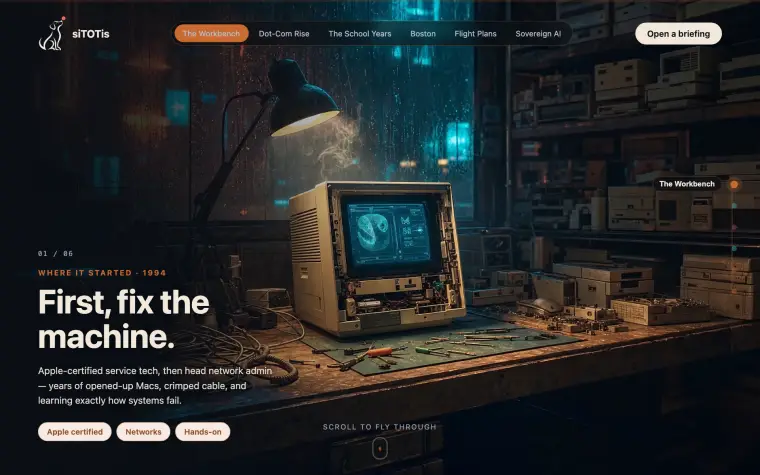 Thirty years, one takeCareer fly-through
 Colosseum, 107 ADHistorical world
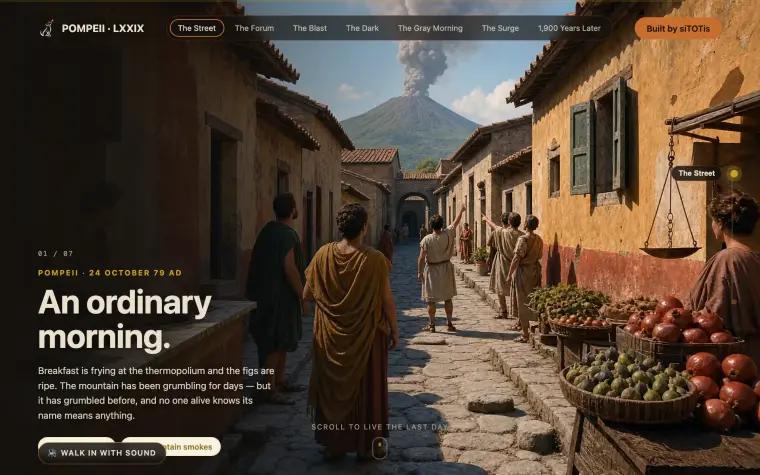 PompeiiHistorical world
 TriumphCanvas 2D + video
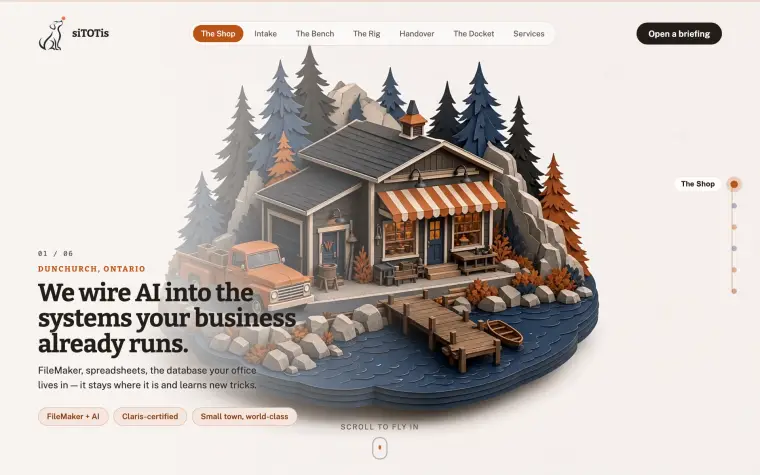 siTOTisCompany front door
 WorldsHub
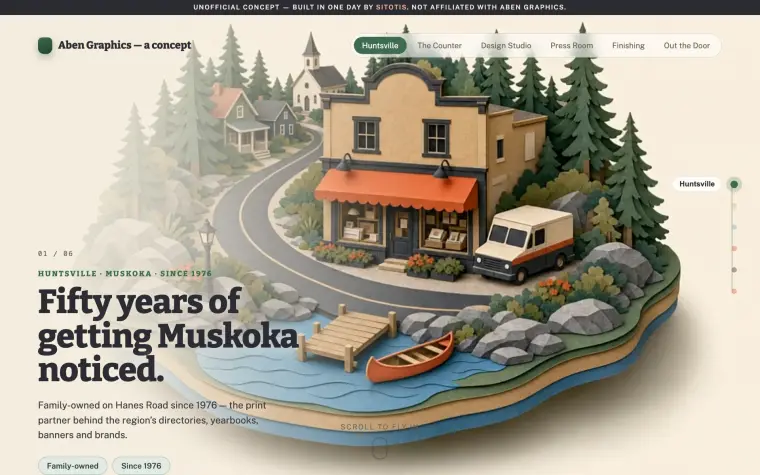 Papercraft dioramaClient concept
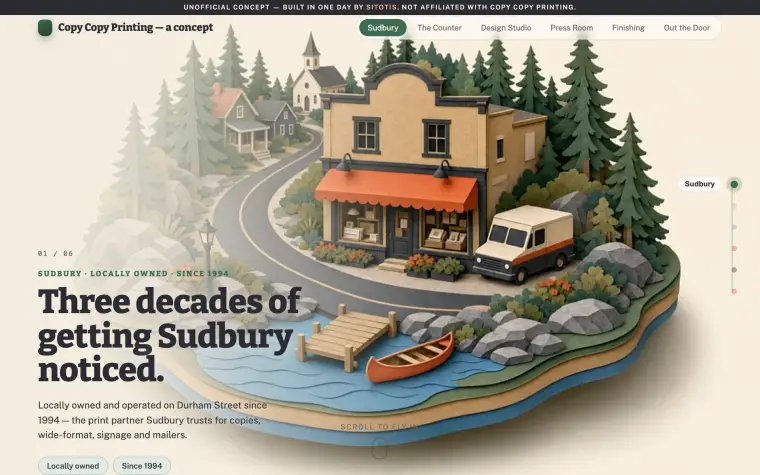 Isometric dioramaClient concept
Real-time 3D — Three.js / WebGL
 The Quiet WingExplorable 3D gallery
 The WoodsProcedural 3D forest walk
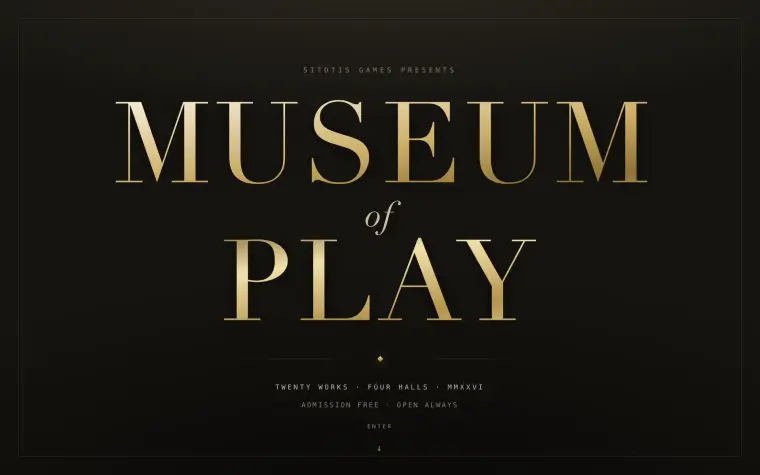 Museum of PlayWalkable games museum
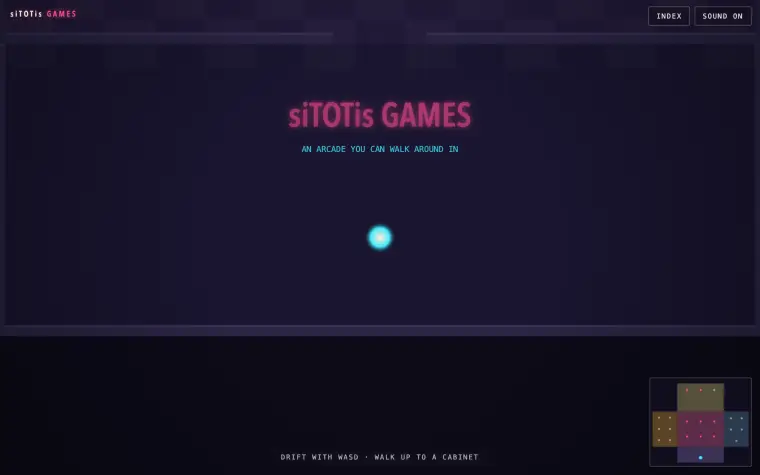 The ArcadeWalkable games portal
Games — Canvas 2D, one mechanic each
 DRIFTTwo buttons
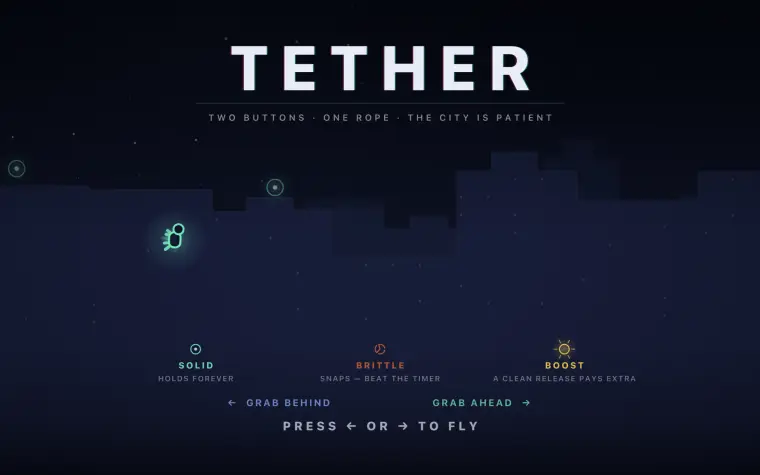 TETHERTwo buttons
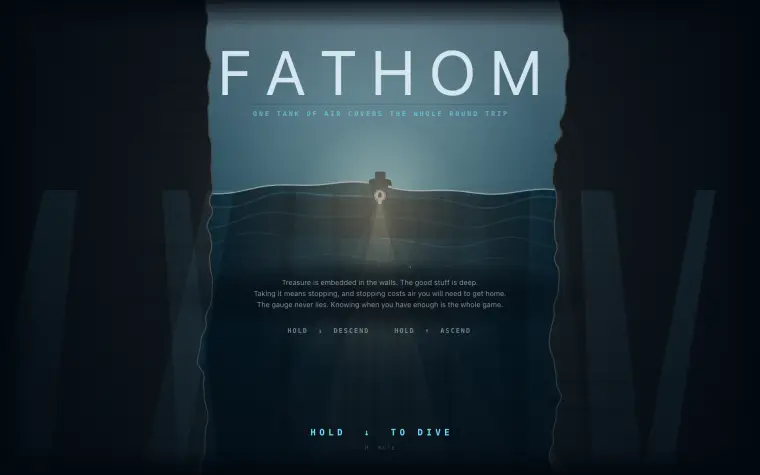 FATHOMOne button
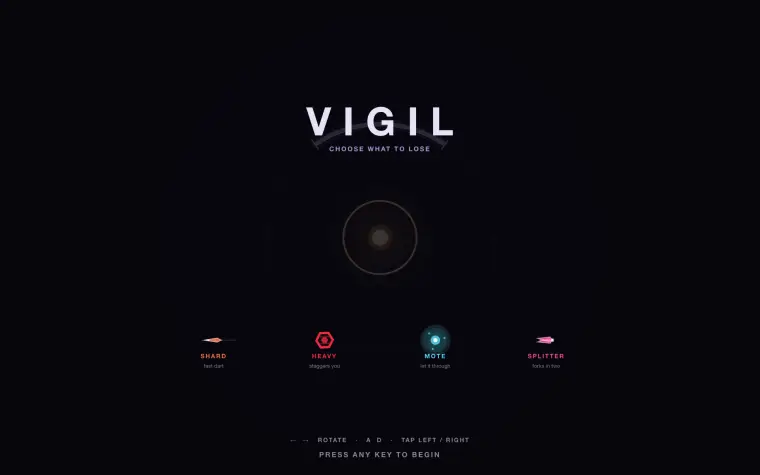 VIGILChoose what to lose
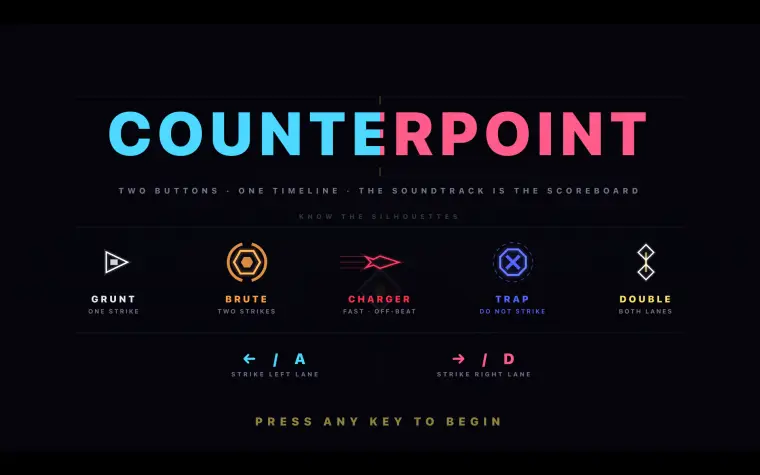 COUNTERPOINTSoundtrack is the score
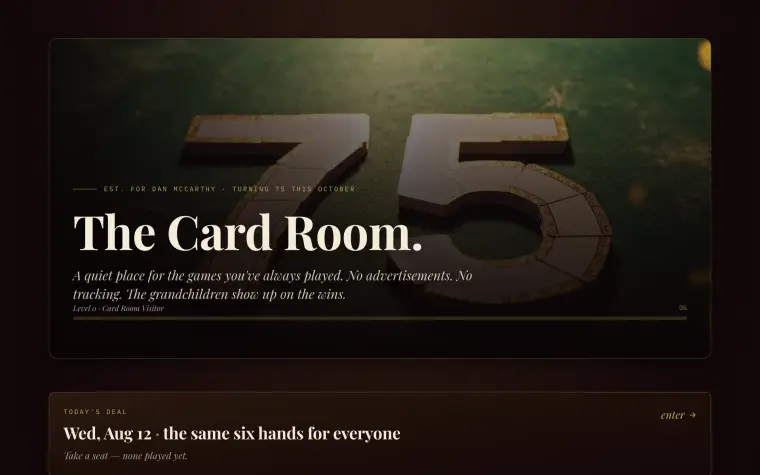 The Card RoomNext.js party games
Product & editorial
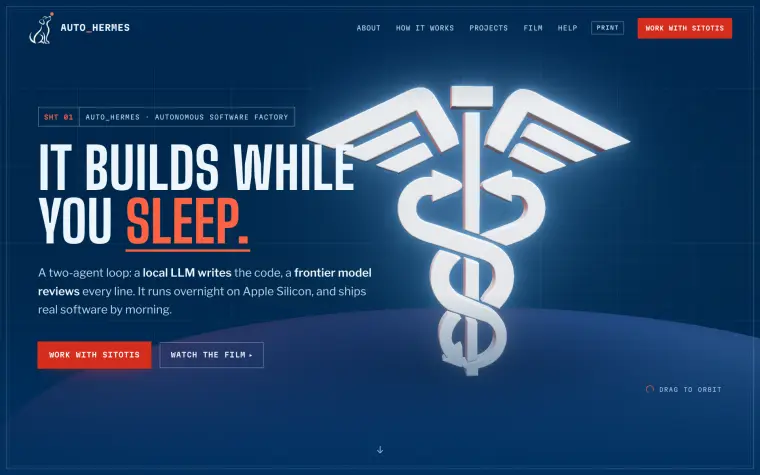 AUTO_HERMESAutonomous coding loop
 Five Hours BackThe $999 assessment — offer below
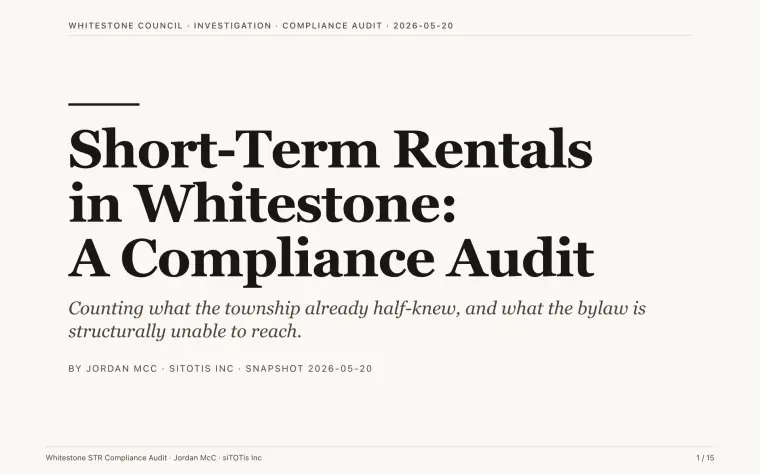 Compliance auditData analysis & deck
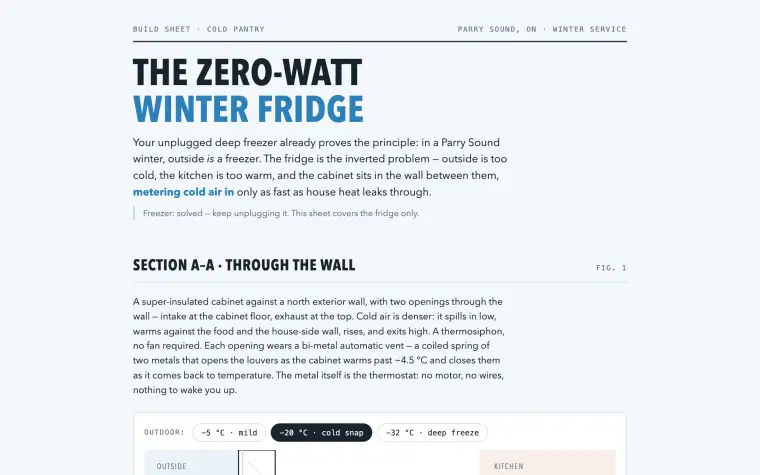 FridgeMicro-site
Motion
I build the video pipeline, not just the clip.
The scenes you scrolled through were generated, chained frame-to-frame so the camera never cuts, colour-graded per scene and encoded for scroll-scrubbing — then verified in a headless browser that measures every seam. Separately, I run a local diffusion-video rig on Apple Silicon with a job queue that arbitrates GPU time against a language-model workload on the same machine, including pause and resume at segment boundaries.
Open to
Remote AI engineering.
Full-stack: I take AI work from the model layer through the interface and out to a live URL. Forward-deployed / solutions engineering, applied AI, or AI-heavy product work. Based in Ontario, Canada. Remote, and comfortable with it — everything above was built that way, alone, from this desk.
And for small businesses
Five Hours Back.
A productized AI assessment for owner-operated businesses in Parry Sound–Muskoka. A 45-minute recorded conversation about how your business actually runs, then a written plan within five business days — the right tools, what they cost, the hours they save each week, and the payback in dollars — and a 30-minute walkthrough call. $999 + HST, one flat fee, nothing recurring. If it doesn’t find you at least five hours a week, it’s free.
The scenes above are AI-generated and colour-graded; the camera move is one continuous pre-rendered take, scrubbed by scroll. Built, and the numbers verified, by me.